
Subscribe
The How to Put an AI Voice Agent to Work
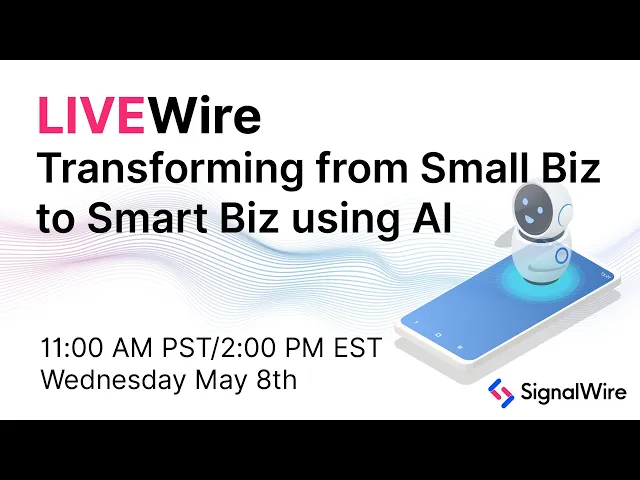
AI voice agents aren’t just a cool demo anymore, they’re ready to do real work. In this LIVEWire, SignalWire’s Brian West shows you how to go from zero to fully functional voice assistant with just a few simple steps using SignalWire’s platform.
Whether you're looking to automate after-hours support, streamline inbound calls, or free up your staff from repetitive tasks, SignalWire’s AI Agent offers a way to build voice workflows that are smart, scalable, and surprisingly straightforward to implement.
What You'll Learn from the Video
How to Build a Digital Receptionist: Brian walks through how SignalWire uses an AI agent named CA to handle inbound calls, collect customer data, and create tickets in Zendesk—all without human intervention.
Under the Hood with SWML: See a live example of how to define functions and prompts in SWML (SignalWire Markup Language) to drive custom voice interactions.
Serverless + Webhook-Free Setup: No infrastructure needed. Your AI agent can call APIs, generate responses, and handle logic without standing up a server.
Real-Time CRM Dips: Greet customers by name and context. The agent can pull info from your CRM before the call even starts, making the experience feel personalized from the first word.
Using Premium Voices: Enhance the interaction with realistic 11Labs voices, including multilingual support.
Handling Complex Use Cases: From HVAC after-hours calls to restaurant reservations, the examples covered show just how adaptable the agent can be.

What is RCS messaging?
Rich Communication Services (RCS) is the next generation of mobile messaging, designed to replace SMS and MMS. It supports high-quality images and video, verified sender identities, read receipts, typing indicators, and interactive elements like carousels and quick replies, all within the phone's native messaging app.
What is RCS Business Messaging (RBM)?
RCS Business Messaging (RBM) applies RCS capabilities to brand-to-consumer communication. It lets businesses message customers from a verified brand identity instead of a phone number, share rich media and documents, offer quick replies and CTAs, and handle actions like appointment confirmations and payments without the customer leaving the chat.
Is RCS replacing SMS?
RCS is positioned as the successor to SMS, but the transition is gradual. Businesses should adopt RCS where supported while keeping SMS and MMS as fallback channels for devices and networks that don't yet support it.
Does iPhone support RCS?
Yes. Apple added RCS support starting with iOS 18, with RCS Business Messaging support arriving in iOS 18.1. Combined with existing Android support, this brings RCS to the large majority of smartphones in the US.
Is RCS more effective than SMS for customer engagement?
Yes. Nearly 80% of consumers say RCS makes them more likely to engage with a brand, and RCS campaigns can achieve click-through rates up to 7x higher than SMS thanks to rich media, interactivity, and verified sender trust.
ow do businesses start sending RCS messages?
Businesses must first register an RCS agent, an approval process involving Google, aggregators, and mobile operators. From there, they can define use cases like marketing, customer service, or appointment reminders. SignalWire guides businesses through registration and campaign planning.
Which industries benefit most from RCS?
Retail, finance, and healthcare are early leaders. Retailers use RCS for in-chat purchases and product carousels, financial institutions use it for secure verified messaging and account alerts, and healthcare providers use it for appointment scheduling and reminders.
Related Resources