
Subscribe
Messaging Campaigns Demystified: A Practical Guide to Getting Registered and Staying Compliant
If you’ve ever tried to launch a messaging campaign and felt like you were drowning in forms, acronyms, and compliance checklists, you’re not alone. The messaging ecosystem, especially when it comes to 10DLC (10-digit long code) in the U.S., has become increasingly complex. But that complexity serves a purpose: it’s designed to protect end users and weed out bad actors.
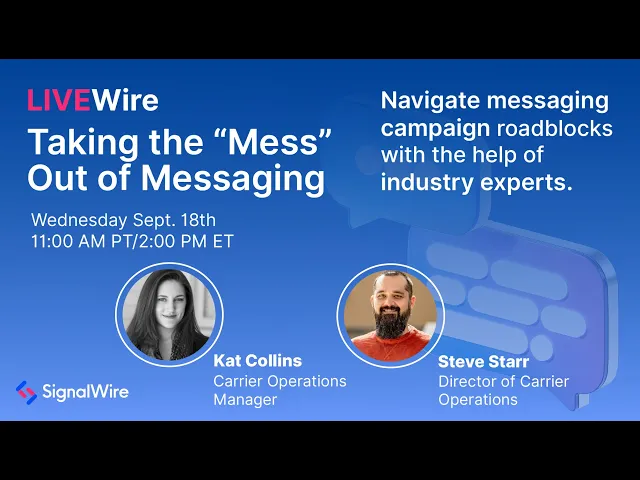
In this LIVEWire webinar, we tackle all of it head-on.
Why Messaging Campaigns Have Become So Complicated
The short answer? Spam and abuse. With the rise of mass SMS/MMS for everything from promotions to security codes, carriers and regulatory bodies introduced stricter requirements for who can send messages—and how.
That’s where The Campaign Registry (TCR) comes in. If you’re sending business-related messages over 10DLC in the U.S., TCR registration is no longer optional. Whether you’re notifying customers about appointments or sending marketing blasts, you need a registered brand and campaign.
But the registration process comes with a lot of moving parts—and that’s exactly what this webinar helps untangle.
Campaign registration is required for all business messaging via 10DLC.Choosing the right use case matters. Selecting “OTP” but sending promotions will get you blocked.Compliance is ongoing. Carriers can and do audit messaging content post-approval.Clear, brand-aligned content wins. Use your brand name in every message, include opt-out language, and avoid public link shorteners.Don’t go it alone. SignalWire offers two options: manage registrations yourself or let us do it for you via API or simple form submission.

What is RCS messaging?
Rich Communication Services (RCS) is the next generation of mobile messaging, designed to replace SMS and MMS. It supports high-quality images and video, verified sender identities, read receipts, typing indicators, and interactive elements like carousels and quick replies, all within the phone's native messaging app.
What is RCS Business Messaging (RBM)?
RCS Business Messaging (RBM) applies RCS capabilities to brand-to-consumer communication. It lets businesses message customers from a verified brand identity instead of a phone number, share rich media and documents, offer quick replies and CTAs, and handle actions like appointment confirmations and payments without the customer leaving the chat.
Is RCS replacing SMS?
RCS is positioned as the successor to SMS, but the transition is gradual. Businesses should adopt RCS where supported while keeping SMS and MMS as fallback channels for devices and networks that don't yet support it.
Does iPhone support RCS?
Yes. Apple added RCS support starting with iOS 18, with RCS Business Messaging support arriving in iOS 18.1. Combined with existing Android support, this brings RCS to the large majority of smartphones in the US.
Is RCS more effective than SMS for customer engagement?
Yes. Nearly 80% of consumers say RCS makes them more likely to engage with a brand, and RCS campaigns can achieve click-through rates up to 7x higher than SMS thanks to rich media, interactivity, and verified sender trust.
ow do businesses start sending RCS messages?
Businesses must first register an RCS agent, an approval process involving Google, aggregators, and mobile operators. From there, they can define use cases like marketing, customer service, or appointment reminders. SignalWire guides businesses through registration and campaign planning.
Which industries benefit most from RCS?
Retail, finance, and healthcare are early leaders. Retailers use RCS for in-chat purchases and product carousels, financial institutions use it for secure verified messaging and account alerts, and healthcare providers use it for appointment scheduling and reminders.
Related Resources