
Subscribe
Messaging Live Demos Using WebRTC and SignalWire Tools
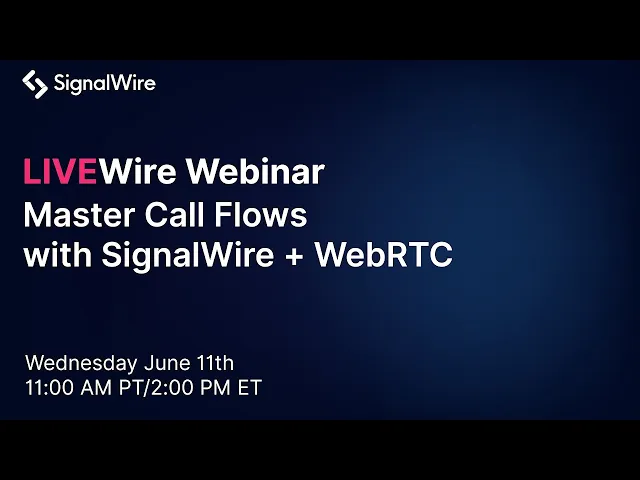
In this excerpt from our recent LIVEWire webinar: Mastering Call Flows with SignalWire + WebRTC we dive into two live demos showcasing how to build rich, real-time voice experiences using SignalWire’s AI tools, WebRTC, and SWML scripts.
The first demo introduces LexiCall, an AI librarian that uses Wikipedia and web search to answer spoken questions like a digital reference desk, powered by voice. With just a click-to-call button on a webpage, users can speak directly to Lexi, who responds conversationally and provides helpful summaries pulled in real time. And thanks to WebRTC, all of this happens directly in the browser with no downloads or plugins.
The second demo revisits a previous concept, data and context that transfers with the caller, and adds layers of some new "secret sauce." This flow begins with a user calling in via a browser button. The AI receptionist greets them, checks their membership status, walks them through becoming a member if needed, and collects a summary of their issue. From there, the call is transferred to a live agent who receives all of the conversation context before picking up, making for smoother handoffs and smarter support.
These examples highlight the power of combining SignalWire's programmable voice features with persistent AI agents and live call control via SWML. You’re not just building voice apps—you’re creating intelligent, real-time communication experiences.
Want to see it in action? Watch the full demo and see how these tools can shape the future of your voice workflows.

What is RCS messaging?
Rich Communication Services (RCS) is the next generation of mobile messaging, designed to replace SMS and MMS. It supports high-quality images and video, verified sender identities, read receipts, typing indicators, and interactive elements like carousels and quick replies, all within the phone's native messaging app.
What is RCS Business Messaging (RBM)?
RCS Business Messaging (RBM) applies RCS capabilities to brand-to-consumer communication. It lets businesses message customers from a verified brand identity instead of a phone number, share rich media and documents, offer quick replies and CTAs, and handle actions like appointment confirmations and payments without the customer leaving the chat.
Is RCS replacing SMS?
RCS is positioned as the successor to SMS, but the transition is gradual. Businesses should adopt RCS where supported while keeping SMS and MMS as fallback channels for devices and networks that don't yet support it.
Does iPhone support RCS?
Yes. Apple added RCS support starting with iOS 18, with RCS Business Messaging support arriving in iOS 18.1. Combined with existing Android support, this brings RCS to the large majority of smartphones in the US.
Is RCS more effective than SMS for customer engagement?
Yes. Nearly 80% of consumers say RCS makes them more likely to engage with a brand, and RCS campaigns can achieve click-through rates up to 7x higher than SMS thanks to rich media, interactivity, and verified sender trust.
ow do businesses start sending RCS messages?
Businesses must first register an RCS agent, an approval process involving Google, aggregators, and mobile operators. From there, they can define use cases like marketing, customer service, or appointment reminders. SignalWire guides businesses through registration and campaign planning.
Which industries benefit most from RCS?
Retail, finance, and healthcare are early leaders. Retailers use RCS for in-chat purchases and product carousels, financial institutions use it for secure verified messaging and account alerts, and healthcare providers use it for appointment scheduling and reminders.
Related Resources